
Technical
Strike cleaner
Technique that holds up when it matters.


Tennis coaching, strength & conditioning and online coaching in Singapore, for adults and juniors.
Explore programmesEvery player starts with an Offset Profile and a clear plan. Then structured training blocks, so every session builds on the last.
Explore programmesWe coach every player
The feeling
That moment when everything clicks. The game slows down, you're one step ahead, and you stop thinking and just play. That's the feeling we coach for.
What we do
Coaching on court, in the gym and online. Every programme runs on the Offset Method.
 02Built for tennisStrength & conditioningSpeed, power and a body that lasts, planned around your tennis week.Explore
 03Prepare to competeJunior performanceFrom first hit to tournament play, for players and parents who want clear progress.Explore
 04Better togetherGroups & teamsPrivate groups, league teams and drop-in sessions, with the same coaching and the same standards.Explore
 05Your coach, off courtOnline coachingA monthly plan and video feedback on your game, wherever you play.Explore
Your journey
You always know where you are, what you're working on, and how far you've come.
Offset Profile
We find out where your game really is, across all four areas.
Training block
Six sessions on your priorities, with notes after every one.
Offset Review
We measure it again, so you can see how far you have come.
Go further
Your next block, or become a member for coaching between sessions.
The Offset Method
Your game is only as strong as its weakest link. We find it, and we fix it.
Strike cleaner
Technique that holds up when it matters.
Choose smarter
Clear patterns and decisions, so you know what to play and when.
Arrive earlier
Sharper first steps, balance and recovery, so you are set before you hit.
Play stronger
Strength, speed and endurance, built around your tennis.
On court. Off court.
Always in
your corner.
Your plan, your notes, your progress, and a coach who knows your game. Between every session, not just during it.
The Offset Athletic story
We've played this game our whole lives. Almost 50 years on court between us, more than 24 of them coaching, and one method: the Offset Method.
Home/Programmes
Coaching on court, in the gym and online. Every programme runs on the Offset Method.
01 · Coaching
One to one, or with a partner. Planned around your goals, measured as you go.

Members save 15% on their own private and semi-private coaching. How membership works
02 · Groups & teams
The same coaching and the same standards, shared with the people you play with.
Your journey
Every programme follows the same path, so you always know where you are and what comes next.
Offset Profile
We find out where your game really is, across all four areas.
Training block
Six sessions on your priorities, with notes after every one.
Offset Review
We measure it again, so you can see how far you have come.
Go further
Your next block, or become a member for coaching between sessions.
Start here · Offset Start
Begin with three sessions.
Your Offset Profile, one session attacking your top priority, then a short Offset Review so you see your before and after.
Prices in SGD. Court fees, where needed, are paid by the player. We'll confirm your exact plan and price when you enquire. How pricing works
Home/Online coaching
Online & hybrid coaching
A personal plan, match feedback and progress tracking from our coaches, wherever you play.
Founding list open · our first 50 members
Online plans
Both include a monthly plan, video analysis from our coaches and member rates on court.
Our core plan
$99a month
Real coaching between sessions, every month.
Built for competitors
$249a month
Twice the feedback, and progress you can see in writing.
Prices in SGD, billed monthly when online plans launch in early 2027. Joining the founding list is free and doesn't commit you.
Membership
Join either online plan and you're an Offset Athletic member, with member rates on selected sessions on court.
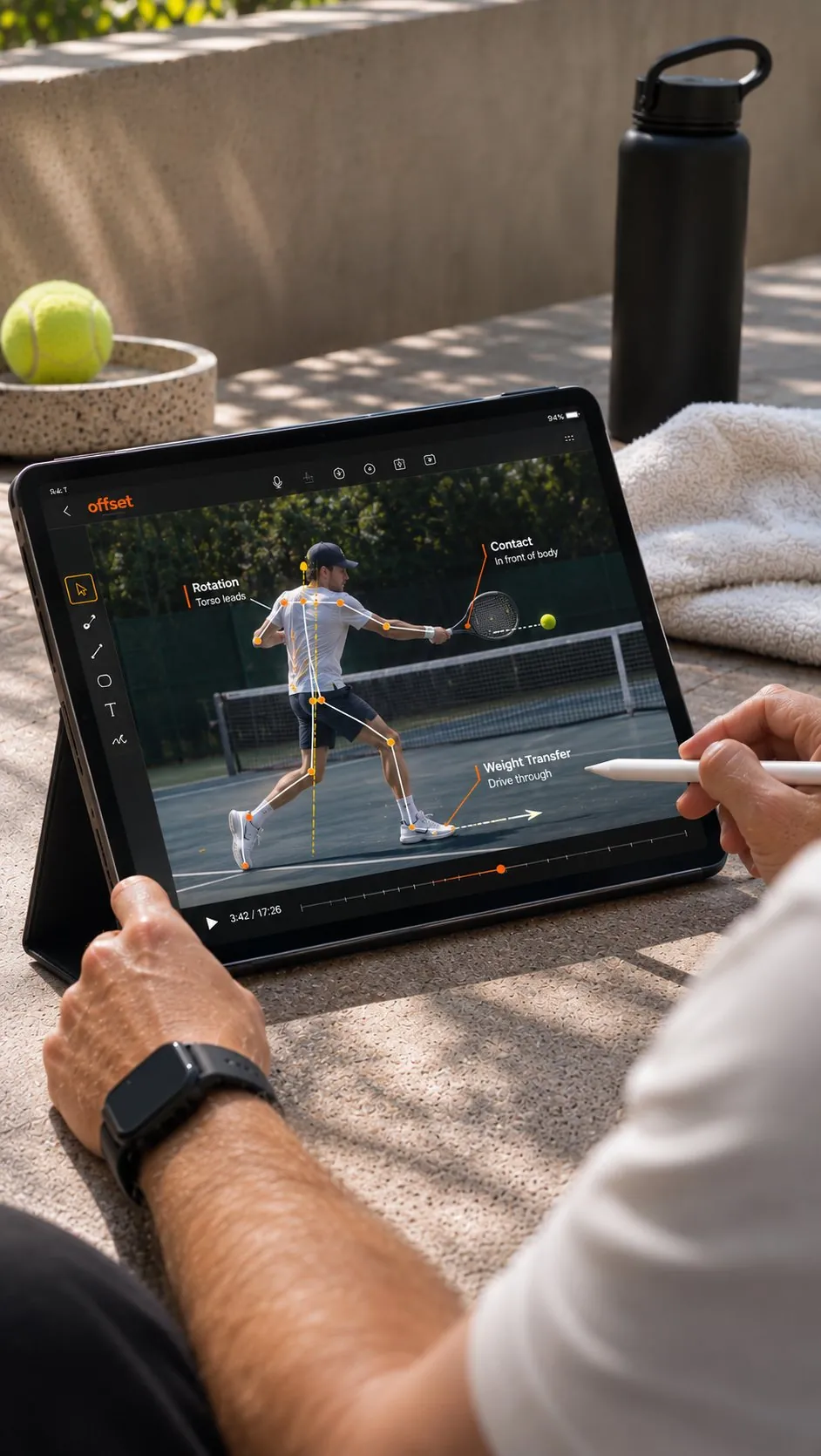
Offset Core or Offset Performance.
Your monthly plan and video feedback from our coaches.
On your own private and semi-private sessions and training blocks. Savings never combine, and drop-in groups, private groups and team programmes aren't included.
Best of both
Any online plan, plus sessions on court with our coaches in Singapore.
Plan. Play. Improve.
Simple from day one. You play, we coach, and your plan keeps moving with you.
Your level, your goals and when you play.
A month of training built for you, on court and in the gym.
Use your plan, then send us video of your game.
Video feedback from your coach, and your next steps.
Founding list · open now
Online coaching opens in early 2027, starting with 50 founding members. Join the list to secure your place, and tell us what you want to work on.
Home/Method
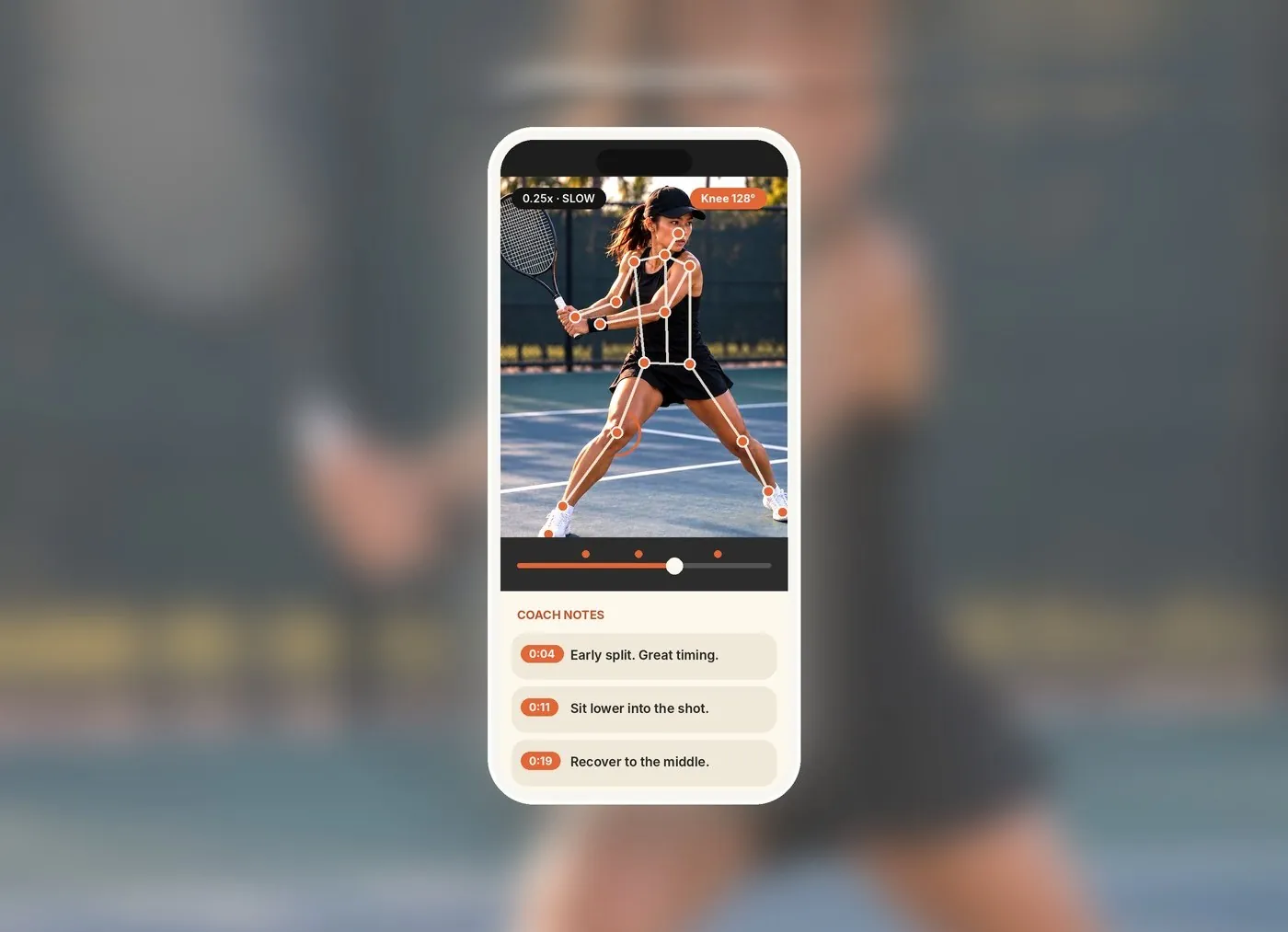
Every game has a shape. We map yours across four areas, find what's really holding you back, and make it the priority.
What we do
A weakness in one area shows up in the others. Here's how we coach each one.
Shots that hold up.
We break every shot into its sequence, show you what good looks like, then build it through repetition until it holds up under pressure.
Know why. Choose better.
We teach you to read the game: why points are won and lost, where to play and when. Then we train your decisions until they come naturally.
Early. Balanced. Ready.
We train your split step, footwork and recovery, so you get to the ball early, hit from a balanced base and are ready for the next shot.
A body built for tennis.
We build the strength, speed and endurance your game asks for, planned around your tennis week, so you can play harder, for longer.
The coaching cycle
Every training block follows the same four steps, so you always know what you're working on and why.
We watch you play. Drills, points and match play show where your game really is, across all four areas.
Six sessions on up to three priorities, with notes after every one. Book blocks back to back to keep going.
We measure your priorities again, so you can see how far you have come.
We set your next priorities and plan your next block.
Your training
Each block focuses on what will make the biggest difference. As you improve, the focus moves with you.
Start here
Find out where you stand.
Begin with three sessions: build your Offset Profile, attack one priority and see your progress.
60-second game profile
Slide each area to where you are today. Your profile draws itself, and you'll see the best place to start.
Your strength
—
Biggest opportunity
—
Your best next step
Strength & conditioning
Movement is your biggest opening.
Begin with three sessions Send it on WhatsAppHome/Coaches
Two coaches. One method. And we don't clock off when the hour ends.
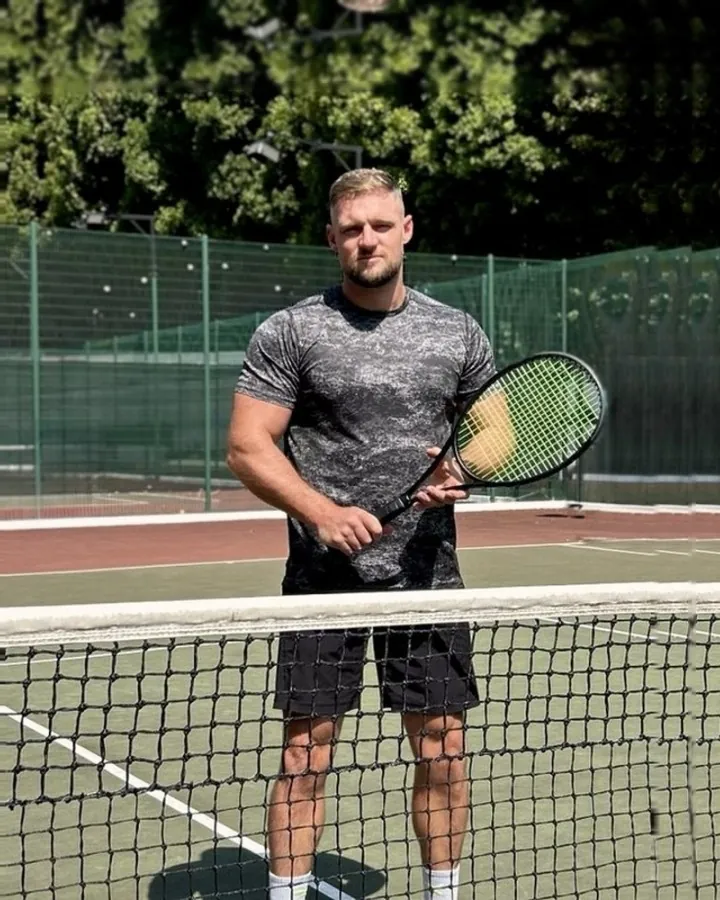
Jon Disley
Founder & Head Coach
I've spent my life in tennis as a player and coach. I built Offset Athletic to coach the whole player: how you strike, choose, move and perform, and how it all connects.
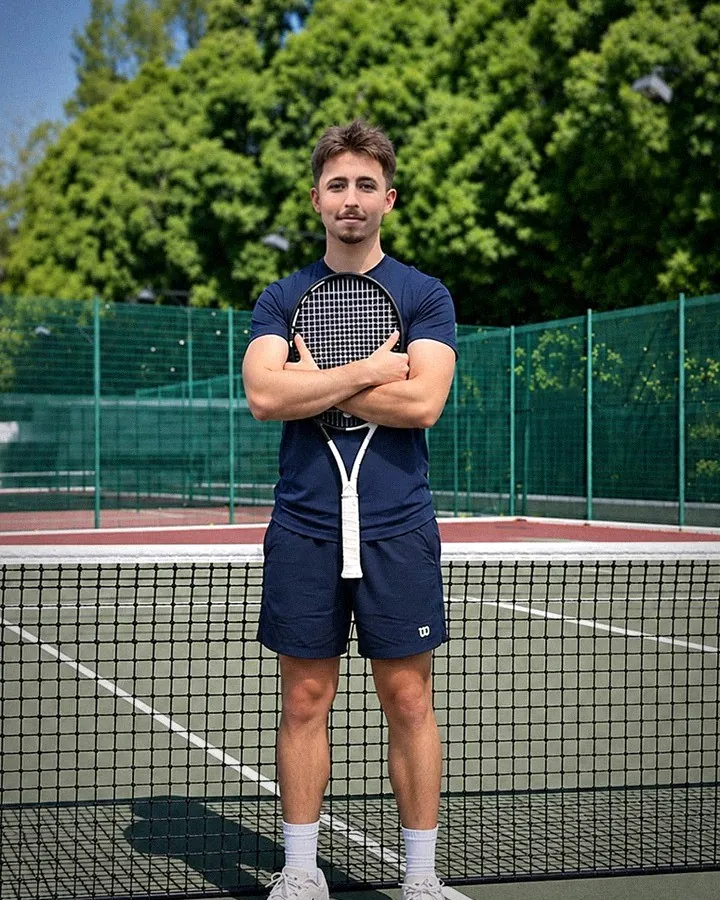
Joins January 2027
Coach · joins January 2027
Felix came through the top tier of British junior tennis and has coached players at every level, from first lessons to elite performers. His sessions are clear, energetic and built on the Offset Method.
* Joins in January 2027
Our story
Tennis gave us everything. We're here to pass it on.
We built Offset to help every player go further. One method that connects how you hit, think, move and train, so every session builds on the last. Because the best feeling in tennis is when it all clicks, and we want you to feel it again and again.
That clarity when everything clicks. When the game slows down and you're one step ahead. Once you've felt it, you'll chase it forever.
The Offset Athletic mark
One unbroken line: the bridge between flow and precision, and the progress in between.
The loop. The rhythm of a point, the shape of a swing, and that state where the game slows down and you just play.
The bridge. Progress, step by step, and the connection between court and gym that lifts your whole game.
The angle. A change of direction, a quick decision, a sharp finish. Intent and precision when it matters.
Book now · 2027 coaching
Tell us about your game and we'll put together the right plan for you.
Booking & enquiries
Five quick steps. It takes about a minute.
Your game profile
01
What would you like to book?
02
What's your level?
Singles, doubles or both?
Do you play matches? (optional)
03
Who would you like to train with?
04
When and where suits you?
Choose any that work.
05
About you
We reply within 24 hours. No payment needed to enquire.
We'll use your details only to reply to your enquiry and arrange coaching. WhatsApp or your email app opens with your enquiry written out, ready to send. See our privacy notice.
What happens next
You send your request.
Your message goes directly to the Offset Athletic team.
We confirm your first session.
Coach, venue and time, agreed with you.
You get your Offset Profile.
Your first session maps your game: your biggest strength, your biggest gap and a quick win. From there, every session in your block works on your priorities, so each one builds on the last.
2027 schedules are being set now. Current clients get priority. Book now to secure your place.
Good to know
Your racket, tennis shoes with non-marking soles, water and a towel. No racket yet? Tell us when you book and we’ll help you choose one.
Your Offset Profile, and it’s a full, high-energy session, not a test. We warm up, hit, run drills and play points, and score your game across our four areas. Then we set your goals and pick one priority to attack in session 2.
Across Singapore. Tell us your area and whether you have a court. We’ll agree the venue before your first session. Court fees, where needed, are paid by the player.
Yes. Semi-private blocks are for two players, priced for both, and they’re ideal for doubles partners.
If we cancel for rain, lightning risk or a court closure, we reschedule at no cost.
Yes. Let us know as early as you can, and we’ll agree the details with you when you book.
Yes. We prepare juniors for STA SPEX tournaments, the Junior Team Tennis League (JTTL), National School Games, STA red, orange and green ball events, and ITF junior tournaments.
Every plan is built around you, so we confirm your price when you enquire. As a guide, private coaching starts from $170 a session, drop-in groups from $40 per player, and online coaching from $99 a month. Members save 15% on their own private coaching.
Tennis is sprinting, stopping, changing direction and striking, over and over. S&C builds the strength and speed behind all of it, and helps keep you injury-free.
Yes. Online coaching works wherever you play, with a monthly plan and video analysis of your game from our coaches.
Home/Blog
Short, practical reads for players and parents, written by our coaches with the research cited. Ideas to try, not rules to follow.
Featured read
70%
of points at the 2015 Australian Open ended within four shots
Play Smarter — 2 min read
It feels like tennis is about long points. The numbers suggest otherwise, and it may change how you practise.
Read the postFeatured read
75%
of points at recreational level end in an error, by one analyst’s conservative estimate
Play Smarter — 2 min read
Highlights show winners. Matches at every level are decided mostly by mistakes, which changes what “playing well” means.
Read the postFeatured read
83%
of strokes in one study were preceded by a split step
Move Faster — 2 min read
The small hop players make as their opponent hits is one of the most important movements in tennis.
Read the postFeatured read
9.7
years of added life expectancy linked to tennis, versus a sedentary lifestyle
Train Stronger — 2 min read
In a 25-year study of more than 8,500 adults, tennis came out on top. The reasons may go beyond fitness.
Read the postFeatured read
2.5L
of sweat an hour or more, recorded in tennis players training hard in the heat
Train Stronger — 2 min read
Heat and humidity make hydration a performance issue in Singapore, not just a comfort one.
Read the postFeatured read
3–8%
of muscle mass lost per decade after 30, without training
Train Stronger — 2 min read
From your thirties onwards, strength work becomes one of the best ways to keep moving well and stay on court.
Read the postFeatured read
15cm
lower in the middle of the net than at the posts
Hit Better — 2 min read
The net isn’t the same height all the way across. Knowing where it dips helps you play with more margin.
Read the postFeatured read
42
high-performance junior players asked how they want parents to behave at matches
Next Gen — 2 min read
Researchers asked junior players directly how they’d like parents to behave at tournaments. Their answers are worth hearing.
Read the postFeatured read
2hrs
of extra sleep a night improved sprint speed and accuracy in one Stanford study
Train Stronger — 2 min read
Players plan sessions carefully, then cut their sleep short. It may be one of the easiest gains available.
Read the postFeatured read
1–3%
faster serves after dynamic warm-up exercises, in one study of young players
Train Stronger — 2 min read
A few gentle hits from the service line will loosen you up. A short, dynamic routine may prepare your body better, and help your serve too.
Read the postShort, practical reads from our coaches. Pick a category or search.
No posts match that search yet. Try “serve”, “doubles” or “strength”.
Partner with Offset Athletic
Build it with us.
We work with brands, clubs, coaches and creators who care about the game as much as we do. Events, content, research, kit or something new: if it helps players go further, we'd love to hear from you.
Email the teamHome/Share your experience
Two minutes, mostly taps. We'll turn your answers into a short testimonial you can edit before sending.
Your name
What do you train with us?
Choose any.
Who coaches you, and for how long?
Before Offset Athletic, what was holding you back?
What's changed since?
A highlight, in your own words (optional)
A match you won, a moment it clicked, what you'd tell a friend.
How likely are you to recommend us?
How should we show your name?
Your testimonial
We've written it from your answers. Edit anything you like.
Preview
By sending, you're happy for Offset Athletic to use this on our website and social media. We'll never share your contact details.
Home/Pricing
Start, train, save. Three simple steps, built around how players really improve.
Offset Athletic Pte. Ltd. — updated 26 November 2026
See our booking terms and privacy notice. Questions? Email hello@offsetathletic.com or WhatsApp +65 8904 3371.
Offset Athletic Pte. Ltd. — updated 26 November 2026
Questions? Email hello@offsetathletic.com or WhatsApp +65 8904 3371. See also our privacy notice.
Home/Privacy
Offset Athletic Pte. Ltd. — updated 26 November 2026
In short: we only use your details to reply to you and plan your coaching. We never sell them, and you can ask us to delete them at any time.
What you choose to tell us when you enquire: your name, contact details, the training you're interested in, your level, whether you play singles or doubles and the matches you play, when you're free, your preferred area and court, and any message you add. The online founding list also asks which plan interests you and what you want to work on. Please don't include medical details or other sensitive personal information.
To reply to your enquiry, recommend the right programme and coach, and understand demand for training and group activities. Sending an enquiry does not confirm a booking. Marketing consent is optional, separate and never required to enquire.
Enquiries are for adults and for parents or guardians. For a junior, provide the adult's contact details. We do not request a child's own contact details, exact date of birth, school name or medical history.
Feedback is private unless you explicitly permit publication. Published comments show only your chosen name and coaching area. You can ask us to remove a published comment at any time.
Enquiries reach us by WhatsApp or email, depending on which you choose. Only our coaching team can see them, and we keep them only as long as we need to reply and follow up. This website doesn't use tracking or advertising cookies.
We handle personal data in line with Singapore's Personal Data Protection Act (PDPA). To ask about access, correction, withdrawal of marketing consent or deletion, email hello@offsetathletic.com or WhatsApp +65 8904 3371.
Email and WhatsApp links open the service you choose. Those services process information under their own terms and privacy practices.
The net isn’t the same height all the way across. Knowing where it dips helps you play with more margin.
By the Offset Athletic coaching team — Updated Nov 2026 — 2 min read
15cm
lower in the middle of the net than at the posts
Under the ITF Rules of Tennis, the net is 0.914m high at the centre strap and 1.07m at the posts. That’s about 15cm of extra room through the middle of the court.
Corner to corner, a singles court measures about 25.2m, roughly 1.4m longer than straight down the line. A crosscourt ball crosses the lower part of the net and has more space to come down.
Many players aim to skim the net. Clearing it by a metre or more on neutral balls, with topspin to bring the ball down, usually gives you depth and margin without losing much pressure.
Related posts
All Hit BetterA reliable second serve takes pressure off your whole service game. Spin, rather than slowing down, is usually what makes it reliable.
By the Offset Athletic coaching team — Updated Nov 2026 — 2 min read
3
things that tend to make a second serve dependable
A serve with plenty of topspin or slice curves downward, so it can clear the net comfortably and still land in. Simply slowing your swing down often has the opposite effect: a flatter, shorter ball that’s easier to attack.
Players often hold back under pressure. A full, relaxed swing that brushes up the back of the ball tends to hold up better than a cautious push.
Deciding before the point where your second serve is going, often to the body or the backhand, removes one decision when it matters. Without one, players tend to hesitate, and a hesitant swing is often where double faults come from.
Coaching view — based on our coaches’ experience rather than a specific study.
Related posts
All Hit BetterHitting fifty forehands in a row feels productive. Research on how we learn skills suggests mixing it up helps those skills hold up in matches.
By the Offset Athletic coaching team — Updated Nov 2026 — 2 min read
7 days
later, players who practised their shots in a mixed order hit more accurately
Blocked practice repeats one skill over and over. Random practice mixes skills up, the way a match does. Researchers call the benefit of mixing things up the contextual interference effect.
Random practice often looks worse during the session. But in many studies it leads to better learning when players are tested later. In one tennis study, players who trained to read shots in a random order were more accurate a week later and decided faster on court.
Repetition still has a place when a new technique needs grooving. Once it’s stable, we move it into games and live points, so it holds up when it matters.
Related posts
All Hit BetterYour phone is one of the most useful coaching tools you own. Video works best when you know what you’re looking for.
By the Offset Athletic coaching team — Updated Nov 2026 — 2 min read
1
question per clip keeps video review useful
Most players are surprised by their first clip. Video shows the timing of your preparation, where you make contact and how you recover, details that are hard to feel at full speed.
From behind the baseline for direction, height and court position. From the side for contact point, spacing and footwork. Slow motion helps, but normal speed is fine.
Pick one thing to check per clip: “Am I ready when they hit?” or “Where am I making contact?” Watching for everything at once usually tells you very little.
Coaching view — based on our coaches’ experience rather than a specific study.
Related posts
All Hit BetterIt feels like tennis is about long points. The numbers suggest otherwise, and it may change how you practise.
By the Offset Athletic coaching team — Updated Nov 2026 — 2 min read
70%
of points at the 2015 Australian Open ended within four shots
Match analyst Craig O’Shannessy, who has worked as a strategist for the ATP Tour, charted point length at the 2015 Australian Open and found that around 70% of points ended within four shots. A coach who charted his own club league found a similar picture: roughly two out of every three points were over by the fourth ball.
In a short point, the ball is struck by the serve, the return, the server’s next ball and the returner’s next ball. Those shots decide a large share of matches, yet they often get less practice time than long exchanges from the back of the court.
You don’t need to outlast anyone from the back to win short points. A dependable serve, a return that lands and a plan for the next ball go a long way.
Related posts
All Play SmarterHighlights show winners. Matches at every level are decided mostly by mistakes, which changes what “playing well” means.
By the Offset Athletic coaching team — Updated Nov 2026 — 2 min read
75%
of points at recreational level end in an error, by one analyst’s conservative estimate
Craig O’Shannessy estimates that around 70% of points at professional level end in an error rather than a winner, and conservatively 75% at recreational level.
An analysis by Tennis Abstract found that a professional player’s unforced error rate predicts the result about as strongly as their winner rate.
Small targets close to the lines and low over the net leave little room for error. Building in a little more height and space inside the lines keeps pressure on while landing far more balls.
Making your opponent hit one more shot than they’d like is one of the simplest ways to win points. At club level, many points are lost by going for too much, too soon.
Related posts
All Play SmarterKnowing what a shot is for makes the choice simpler. At Offset Athletic we use six intentions.
By the Offset Athletic coaching team — Updated Nov 2026 — 2 min read
6
intentions we use to describe every shot
Neutral keeps the point balanced while you look for an opening. Build starts to shift it your way with depth, width or a change of pace.
Attack uses a better ball to apply pressure. Finish closes the point when the opportunity is clearly there.
Defend buys time under pressure. Steal turns a defensive moment into an opportunity.
Coaching view — based on our coaches’ experience rather than a specific study.
Related posts
All Play SmarterIn doubles, the team at the net often has the upper hand. The first volley is where that usually starts.
By the Offset Athletic coaching team — Updated Nov 2026 — 2 min read
1st
volley: the shot that often decides who controls the net
Once a team gets a solid first volley in, the other pair has to find a way past one or two players at the net. That’s hard to do repeatedly. If the first volley is missed or sits up, the advantage swings the other way, and the serving team can get caught halfway in.
Serves to the middle or the body make a wide, angled return less likely, which gives your net player a better chance to move.
The first volley rarely needs to be a winner. Deep or low through the middle, then close in for the next ball.
A low return at an incoming server’s feet makes their first volley a defensive one.
Coaching view — based on our coaches’ experience rather than a specific study.
Related posts
All Play SmarterStrong doubles teams win more points together than they could alone. Much of that has nothing to do with how hard you hit.
By the Offset Athletic coaching team — Updated Nov 2026 — 2 min read
4
habits we see in strong partnerships
A few words before the point, where you’re serving, whether you’re crossing, give your partner a picture of what’s coming.
Mistakes happen. Partners who recover quickly and move on help the team play well for longer. Dwelling on an error tends to lead to tighter, more cautious tennis on the next few points.
Imagine a rope between you. When one moves forward, wide or back, the other adjusts so the gaps stay small.
Sometimes the best shot is the one that sets up your partner, not the winner.
Coaching view — based on our coaches’ experience rather than a specific study.
Related posts
All Play SmarterMuch of a match happens between points. What you do in those seconds can shape the next one.
By the Offset Athletic coaching team — Updated Nov 2026 — 2 min read
16 sec
the length of the between-point routine described by sports psychologist Dr Jim Loehr
Performance psychologist Dr Jim Loehr studied what top players did between points and described four stages, often called the 16-second cure. Without a routine, it’s easy to carry frustration or nerves from one point into the next.
A calm physical response straight after the point, then slower breathing and a looser grip to let your heart rate settle.
Check the score, choose a plan for the next point, then a consistent routine, such as the same bounces, before you serve or return.
Related posts
All Play SmarterThe small hop players make as their opponent hits is one of the most important movements in tennis.
By the Offset Athletic coaching team — Updated Nov 2026 — 2 min read
83%
of strokes in one study were preceded by a split step
A split step is a small, light hop that lands with your feet a little wider than your shoulders. It loads your legs so you can push off quickly once you see the ball.
In an analysis of more than 8,500 strokes from professional and junior matches, players split before 82.9% of their movements. In a lab study, players reached a target about 13% faster with a split step than without.
Skilled players tend to leave the ground around the moment their opponent hits, and land as the direction becomes clear. Too early or too late and the benefit fades.
Related posts
All Move FasterFast returners aren’t only quick. They pick up clues early, from the server’s body and from the situation.
By the Offset Athletic coaching team — Updated Nov 2026 — 2 min read
8
top-250 professionals interviewed on how they read the serve
Researchers describe two information sources. Kinematic cues come from the server’s action, such as where the ball toss goes. Contextual cues come from everything else: the score, the server’s habits and what happened on earlier points.
In interviews with eight current or former top-250 players, returners described combining both: forming an expectation before the serve, then updating it as the action unfolds.
A 2025 study found that professional players improved their anticipation after video training focused on a specific opponent. The more specific the practice, the better it seemed to transfer.
Related posts
All Move FasterWhere you go after you hit matters as much as getting to the ball. The best spot isn’t always the centre mark.
By the Offset Athletic coaching team — Updated Nov 2026 — 2 min read
1
idea for recovery: cover your opponent’s best options
After you hit, your opponent has a range of shots available. A useful recovery position sits roughly in the middle of that range, so you’re not leaving one side wide open.
After a wide crosscourt ball, that position is often a step or so to the same side of the centre mark. After a ball down the middle, the centre is usually right.
Arriving in position matters less if you’re still moving when they hit. Recovering in time to split is the goal. If you’re still running when they hit, it’s hard to change direction, and the open court is where they’ll aim.
Coaching view — based on our coaches’ experience rather than a specific study.
Related posts
All Move FasterBig steps get you to the ball. Small ones set you up to hit it well.
By the Offset Athletic coaching team — Updated Nov 2026 — 2 min read
3
phases of movement: first step, travel, adjust
An explosive first step out of the split, then efficient running steps to cover the distance. A slow start means arriving late and hitting on the run.
As you get close, smaller steps let you fine-tune your distance from the ball. Many mistakes put down to technique start with being slightly too close or too far away.
Arriving balanced, with time to set, makes it far easier to control height, depth and direction.
Coaching view — based on our coaches’ experience rather than a specific study.
Related posts
All Move FasterA few gentle hits from the service line will loosen you up. A short, dynamic routine may prepare your body better, and help your serve too.
By the Offset Athletic coaching team — Updated Nov 2026 — 2 min read
1–3%
faster serves after dynamic warm-up exercises, in one study of young players
In a study of elite young players, adding static stretches to a traditional warm-up made no difference to serve speed. Adding dynamic exercises or upper-body plyometrics increased serve speed by 1 to 3%.
Sports medicine specialists at Emory University’s Tennis Medicine Program list skipping a dynamic warm-up among the risk factors for tennis injury in adults.
Movement-based exercises through the ranges you’ll use on court: leg swings, lunges with a twist, side shuffles, arm circles and light skips.
Related posts
All Train StrongerFrom your thirties onwards, strength work becomes one of the best ways to keep moving well and stay on court.
By the Offset Athletic coaching team — Updated Nov 2026 — 2 min read
3–8%
of muscle mass lost per decade after 30, without training
Muscle mass tends to decline gradually from around 30, by roughly 3 to 8% per decade, faster after 60. Strength and power drop with it, and tennis relies on both.
Tennis is great exercise, but it doesn’t usually load your muscles heavily enough to offset that decline by itself. Without extra strength work, many players notice they gradually lose power, speed and resilience to injury.
Research shows strength training builds muscle and strength well into older age. It’s rarely too late to start.
Related posts
All Train StrongerIn a 25-year study of more than 8,500 adults, tennis came out on top. The reasons may go beyond fitness.
By the Offset Athletic coaching team — Updated Nov 2026 — 2 min read
9.7
years of added life expectancy linked to tennis, versus a sedentary lifestyle
Researchers followed 8,577 adults for up to 25 years. Tennis was linked with 9.7 extra years compared with being sedentary, ahead of badminton (6.2), football (4.7), cycling (3.7), swimming (3.4) and jogging (3.2).
The researchers noted that the sports linked with the biggest gains tended to be more social. Tennis combines short, intense efforts with a partner on the other side of the net.
This was an observational study. It shows an association, not proof that tennis itself adds years, and tennis players may differ in other ways too.
Related posts
All Train StrongerHeat and humidity make hydration a performance issue in Singapore, not just a comfort one.
By the Offset Athletic coaching team — Updated Nov 2026 — 2 min read
2.5L
of sweat an hour or more, recorded in tennis players training hard in the heat
The National Environment Agency publishes a heat stress advisory on the myENV app and weather.gov.sg, based on Wet Bulb Globe Temperature. Below 31°C is low, 31 to 33°C moderate, and 33°C or above high.
Studies of tennis in the heat have recorded sweat rates of 2.5 litres an hour or more. It’s hard to catch up once you’re behind. Research suggests that losing around 2% of your body weight in fluid can affect concentration and performance, and the heat makes cramp and heat illness more likely.
Arrive well hydrated and drink at changeovers. Sodium is the main electrolyte lost in sweat, so an electrolyte drink can help in long or very hot sessions.
Related posts
All Train StrongerElbow and shoulder pain are common complaints in adult tennis. A few simple habits may lower the risk.
By the Offset Athletic coaching team — Updated Nov 2026 — 2 min read
30–50
the age range most often affected by tennis elbow
Tennis elbow, or lateral epicondylitis, most often affects adults between 30 and 50, and it isn’t limited to tennis players.
Strengthening the forearm and shoulder helps your tendons handle the load of hitting. Slow, controlled lowering exercises are widely used in managing tennis elbow.
A grip that’s too big, very stiff strings at high tension and late, arm-only swings can all add stress. Left unchecked, a mild ache can turn into a problem that takes months to settle.
Related posts
All Train StrongerPlayers plan sessions carefully, then cut their sleep short. It may be one of the easiest gains available.
By the Offset Athletic coaching team — Updated Nov 2026 — 2 min read
2hrs
of extra sleep a night improved sprint speed and accuracy in one Stanford study
In a Stanford study, college basketball players extended their sleep by nearly two hours a night for several weeks. Their sprint times, shooting accuracy, reaction time and mood all improved.
A consistent bedtime, especially before matches, and screens away before bed can help. Short or irregular sleep can leave you slower to react and more error-prone, which often shows late in long matches.
Training creates the stimulus. Rest and sleep are when your body adapts to it.
Related posts
All Train StrongerA grip that fits lets you hold the racket without squeezing. It’s one of the cheapest things to get right.
By the Offset Athletic coaching team — Updated Nov 2026 — 2 min read
1–5
the grip sizes most adult rackets come in, from 4⅛ to 4⅝ inches around
Open your hand and measure from the middle crease of your palm to the tip of your ring finger, in inches. That length roughly matches the grip size that suits you.
Grip size is the distance around the handle. It’s printed on the butt cap in one of two ways: in inches (4⅛, 4¼, 4⅜, 4½, 4⅝) or as a number from 1 to 5, where 1 = 4⅛ and 5 = 4⅝. Some brands add an L, as in L2. Most adults use somewhere between size 1 and size 4.
Many players choose the smaller size and build it up with an overgrip. It’s easy to make a grip bigger and hard to make it smaller.
A grip that’s too large can make you squeeze harder, which may add strain to the forearm, and it can make quick grip changes harder. Too small, and the racket tends to twist in your hand on off-centre hits, so you grip tighter to hold it steady. A good fit lets you swing with a looser hand.
Related posts
All Gear UpStrings may affect how your racket plays as much as the frame does. A few basics help you choose.
By the Offset Athletic coaching team — Updated Nov 2026 — 2 min read
~30%
less tension in the strings than the stringing machine was set to, measured in one physics study
Multifilament strings are softer, with good feel and comfort. Polyester is stiffer and more durable, and many hard hitters like it for control and spin. Hybrids combine the two.
Lower tension generally gives more power and comfort, higher tension more control. Strings lose tension during and after stringing, even sitting in your bag.
A common rule of thumb is to restring as many times a year as you play each week. Stiff polyester that feels dead may be worth replacing sooner, even before it breaks. Strings that have lost their tension and bite can feel dead, give less control and send more vibration into your arm.
Related posts
All Gear UpRunning shoes are built to go forwards. Tennis asks you to stop, slide and change direction.
By the Offset Athletic coaching team — Updated Nov 2026 — 2 min read
3
things to check in a court shoe
Tennis shoes are built with a firmer side wall and a wider base to support side-to-side movement and braking.
Singapore courts are mostly hard courts, which wear outsoles quickly. A durable hard-court outsole is usually worth it.
Smooth patches, especially under the ball of the foot or the toe you drag on the serve, are a sign of reduced grip. Worn shoes slip more and support you less when you change direction, which can raise the risk of a rolled ankle.
Coaching view — based on our coaches’ experience rather than a specific study.
Related posts
All Gear UpThe racket your favourite player uses may not be the right one for you. Three specs matter more than the brand.
By the Offset Athletic coaching team — Updated Nov 2026 — 2 min read
3
specs that shape how a racket feels: head size, weight and balance
A larger head gives a bigger sweet spot and more easy power. A smaller head offers more control but asks for cleaner contact. Most adult players sit somewhere in the middle.
A heavier racket feels more stable against pace, but is harder to swing quickly late in a match. Balance changes how heavy it feels: head-light rackets are quicker at the net, head-heavy ones add weight to groundstrokes.
Demo rackets let you play a few sessions before committing. Changes in feel are easier to notice over a week than in ten minutes. A racket that’s too heavy can tire your arm late in a match, and one that’s too light can feel unstable against pace.
Coaching view — based on our coaches’ experience rather than a specific study.
Related posts
All Gear UpSlower balls and smaller courts aren’t a shortcut. They help children keep the ball going, serve and score sooner.
By the Offset Athletic coaching team — Updated Nov 2026 — 2 min read
3
colour stages before the yellow ball: red, orange, green
Under the ITF’s Tennis10s structure, children progress through red, orange and green stages. Red is the slowest ball on the smallest court, orange is a step up, and green is played on a full court with a ball that’s about 25% slower than a yellow one.
Since 2012, the ITF Rules of Tennis have required competition for players aged 10 and under to use these slower balls on the appropriate court sizes.
Guidance links each stage to approximate ages, but the right stage depends on the child’s size and skills. Keeping the ball going and serving consistently are good signs they’re ready for the next one. Moving up too soon can mean shorter points, more frustration and habits that are hard to undo.
Related posts
All Next GenResearchers asked junior players directly how they’d like parents to behave at tournaments. Their answers are worth hearing.
By the Offset Athletic coaching team — Updated Nov 2026 — 2 min read
42
high-performance junior players asked how they want parents to behave at matches
Sports psychologists ran focus groups with 42 high-performance Canadian juniors, with an average age of 13.5, about the parental behaviours they found helpful at competitions.
They preferred parents not to give technical or tactical advice, leaving that to the coach unless the parent had real tennis expertise. Practical help, such as food, preparation and logistics, was welcome.
Players valued comments about effort and attitude rather than results, and wanted parents’ body language to match their supportive words.
Related posts
All Next GenA fast-growing junior can look less coordinated almost overnight. It’s normal, and a time to adjust training rather than push harder.
By the Offset Athletic coaching team — Updated Nov 2026 — 2 min read
~1cm
a month: how fast some teenagers grow at their peak
During the adolescent growth spurt, bones can lengthen faster than muscles and tendons adapt. Coordination, flexibility and timing may dip for a while.
Studies show young athletes are more likely to be injured during and just after rapid growth. Common examples are Osgood-Schlatter disease at the knee and Sever’s disease at the heel.
Supervised, age-appropriate strength training, sensible training volumes and enough recovery. Persistent pain is worth having checked by a doctor or physiotherapist.
Related posts
All Next GenIt’s natural to want a talented junior to focus on tennis. For younger children, research suggests variety helps.
By the Offset Athletic coaching team — Updated Nov 2026 — 2 min read
12 hrs
a week at most for a 12-year-old, using the common guide of no more hours of organised training than their age
A 2016 consensus statement found little evidence that young children benefit from specialising early in most sports, and linked early specialisation with overuse injuries and burnout.
Research led by Dr Neeru Jayanthi found that young athletes who trained more hours per week than their age in years were more likely to have serious overuse injuries.
The same research found injury risk rose when organised sport outweighed free play by more than two to one.
Related posts
All Next Gen